

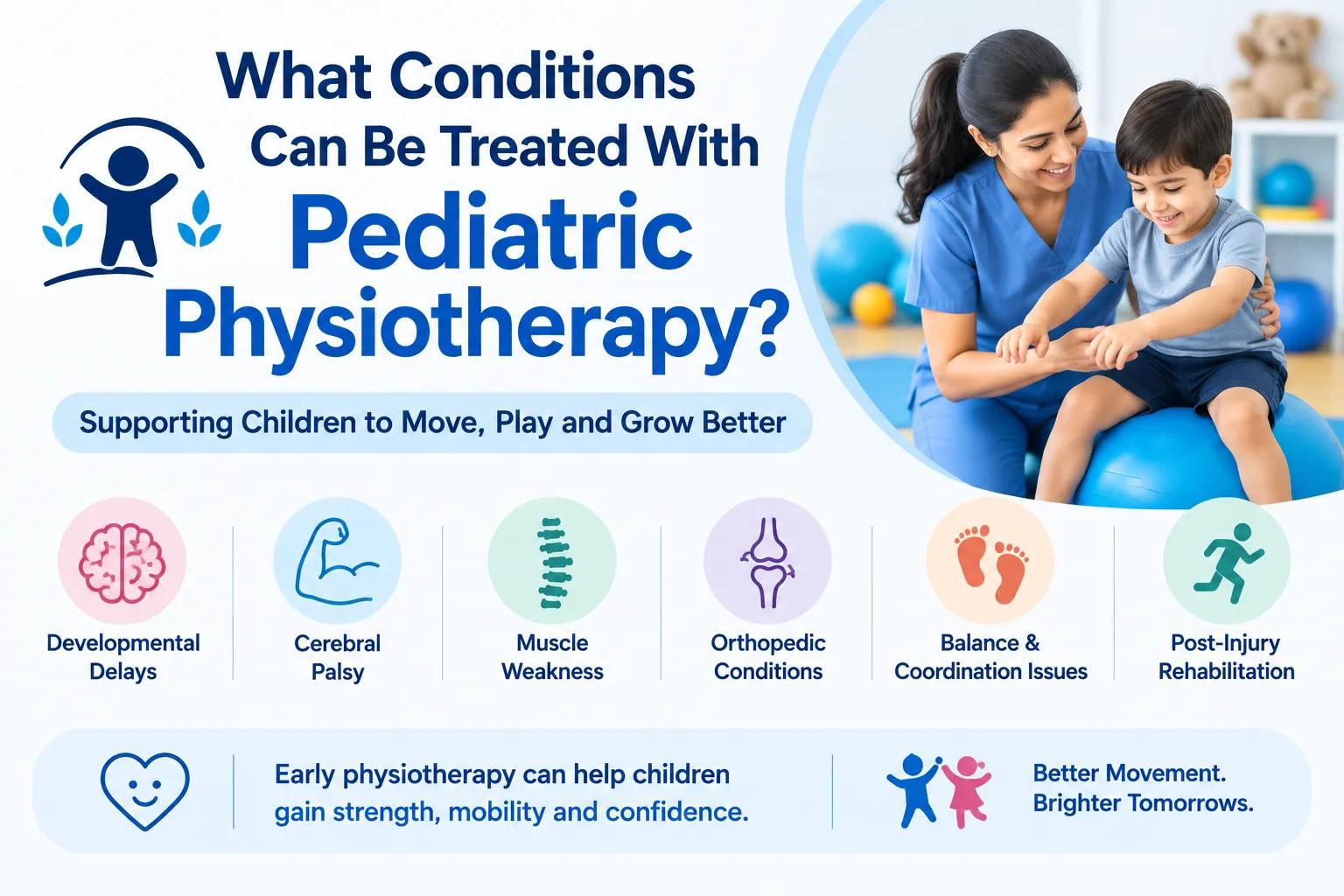
Pediatric physiotherapy helps children improve their movement, strength, balance, co-ordination, flexibility and physical independence. It can help children who have developmental delays, neurological disorders, orthopedic problems, injuries and problems with walking or posture.
The pediatric physiotherapy at Sarvesh Health City is planned as per the age of the child, condition, developmental stage and functional needs. Parents can consult with a Best Physiotherapy Doctor In Hisar to know if physiotherapy can help their child.
What Is Pediatric Physiotherapy?
Pediatric physiotherapy is a specialty of physiotherapy that deals with infants, children and adolescents. Treatment differs from adult physiotherapy in that it is modified to suit a child’s growth, development, attention span and ability to participate.
Therapists may use age-appropriate exercises, movement activities, stretching, strengthening techniques, balance training, gait training and play-based therapy. We want to improve not just the physical abilities but also to allow kids to be more comfortable doing everyday activities at home, at school and at play.
Which Conditions Can Be Treated With Pediatric Physiotherapy?
Physiotherapy can help children with a wide range of conditions. Management is directed at the presenting symptoms, diagnosis and functional limitations of the child.
Can Physio Help Children with Developmental Delays?
Some babies take longer than others to reach developmental milestones like rolling over, sitting, crawling, standing or walking. Physiotherapy can help to identify problems with movement and give activities to encourage motor development appropriate for the child’s age.
Therapy may focus on improving:
Head and trunk control
Balance in sitting and balance in standing
Crawling and Movements
Muscular Strength and Coordination
Mobility Skill
Early assessment can help parents understand if their child is developing movement patterns normally and if extra support may be needed.
How Physiotherapy Can Help Children With Cerebral Palsy?
Cerebral palsy can cause variations in muscle tone, coordination, balance, posture and movement in children. Pediatric physiotherapy helps them develop functional movement skills and remain flexible.
Therapy may involve stretching, strengthening, balance activities, gait training, positioning and functional exercises, depending on the needs of the child. The treatment plan can be revised as the child matures and gains skills.
Pediatric physiotherapy can be useful for children with neurological disorders.
Neurological diseases can affect muscle coordination, control, balance and mobility. Children's physiotherapy can help children with problems such as developmental co-ordination problems, muscular disorders and other neurological problems.
Therapy aims to help children keep or improve their functional movement and to participate in everyday activities with as much independence as possible.
What Orthopedic Problems Can a Pediatric Physiotherapist Treat?
Children may develop orthopedic problems involving posture, joints, muscles or movement. Physiotherapy may help with problems such as:
Bad posture
Gait disorders
Stiffness in joints
Muscle weakness
Some problems with the feet and legs
Recovery from orthopedic surgeries
Musculoskeletal injuries
The therapist assesses the child's movement and creates exercises for the core problem.
What Is The Role Of Physiotherapy In Helping Children With Walking Problems?
There are many reasons why walking problems can occur, such as developmental delays, muscle weakness, neurological conditions, orthopedic problems, or previous injuries.
Gait training in children can improve their balance, coordination, leg strength, weight shifting and walking patterns. Therapists may also suggest supportive strategies or exercises for patients to do at home where appropriate.
Can Kids Recover From Sports Injuries With Physiotherapy?
Sports can cause sprains, strains, muscle injuries or other physical problems for children and teens who play them. Pediatric physiotherapy can aid recovery through treatment of pain, flexibility, strength, balance and movement.
A gradual rehabilitation program can also help children return to their normal physical activities in a safe manner, while minimizing the chances of movement problems.
How does pediatric physiotherapy help with poor balance and coordination?
Some children have problems with balance, movement coordination or doing activities that require several movements of the body. These problems can make it hard to run, jump, climb stairs, play sports, or take part in school activities.
Therapy may involve balance exercises, coordination activities, strengthening, and practicing functional movement. Therapy is often provided through games and activities which helps to make therapy more engaging for children.
Benefits of Pediatric Physio
Pediatric physiotherapy can help with many areas of physical development and function. Depending on the child’s condition, benefits may include:
Improved strength and flexibility of muscles
Better balance and coordination
Improved posture and body awareness
Better walking and mobility
More independence in day-to-day activities
Developmental milestone assist
Increased play and physical activity participation
Improved functional movement following injury or surgery
How the therapy works depends on the condition of the child, the age, how often the child comes for therapy and other individual factors.
When do parents need to seek pediatric physiotherapy?
If a child continues to have difficulty with movement or physical activities, parents may want to consider a professional evaluation.Some possible signs to watch for are delayed motor milestones, frequent falls, difficulty with walking, abnormal gait, poor balance, constant stiffness, muscle weakness or difficulty using one side of the body.
Physiotherapy may also be recommended as part of a child’s overall care by a pediatrician, neurologist, orthopedic specialist or other health care professional.
What is involved in a pediatric physiotherapy assessment?
The first assessment usually includes a review of the child's medical and developmental history and observation of the child's movement. The physiotherapist may assess muscle strength, flexibility, posture, balance, co-ordination, gait and functional abilities.
From this the therapist can devise an individual treatment plan. We can also provide information for parents about safe types of exercise and activities that can be done at home.
Importance of early physiotherapy for children
The childhood period is of great importance for the physical growth and motor development of the child. If your child has trouble with movement, early professional assessment can help identify areas where they may need support.
Physiotherapy is not the same treatment for all children. The exercises and activities selected are based on the individual needs and developmental abilities of the child. Regular monitoring allows for adjustments to the therapy plan as the child progresses.
How can parents help with physiotherapy in the home?
The role of parents is critical for maintaining progress between therapy sessions. They are to follow the therapist’s instructions and should encourage children to participate in the suggested activities safely.
Professional therapy can be supplemented with simple age-appropriate movement activities, regular physical play and opportunities to practice functional skills. Parents should not start exercises or use equipment without the proper professional guidance especially when the child has an underlying medical condition.
Summary
Pediatric physiotherapy helps children with a wide range of developmental, neurological, orthopedic, balance, coordination, walking and injury issues. The main objective of such therapy is the improvement of functional movements, physical development of children and making them more independent in performing everyday tasks.
Sarvesh Health City offers customised physiotherapy for children, depending on the needs of their particular movements and physical development. An expert evaluation will help you to establish whether your child needs physiotherapy in case you have any concerns regarding his/her movements, posture, balance, strength or development.